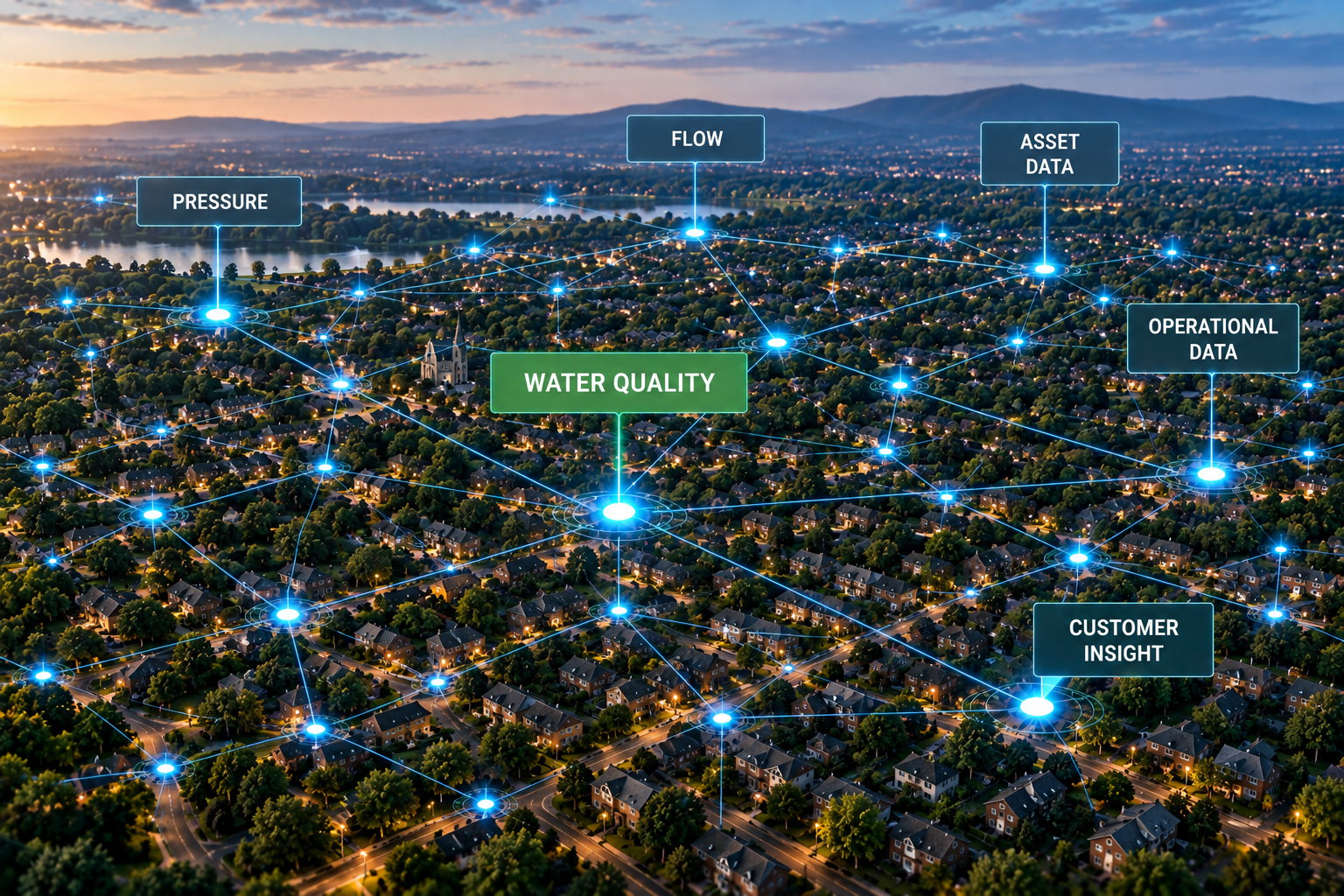
The short version
- Water safety planning runs catchment to consumer, and distribution sits inside it.
- The evidence problem is identical: control measures have to be shown to be working.
- Nothing in the argument on this site depends on a particular regulator.

The frame
Risk assessment and management from catchment to consumer is the internationally recognised approach to drinking water safety, and it is the ancestor of both the European and the British frameworks.
It asks what the others ask: which hazards arise where, which control measures address them, and what evidence shows those measures are effective.
Distribution is the thinnest part of most plans
Source protection and treatment are typically well documented. Distribution is characterised by inference — residence times from a model, decay from a coefficient, integrity from the absence of reported failure.
Those are reasonable assumptions. They are not observations, and a water safety plan that cannot distinguish between them is weaker than it appears.
What to start now
- Identify which control measures in the plan are verified by observation and which by assumption.
- Establish a seasonal baseline at a small number of decision-relevant locations before expanding coverage.
- Keep operational and verification evidence separately labelled from the outset. Retrofitting that distinction is difficult.