Reducing water quality contacts and demonstrating effective risk control – what are Ofwat and DWI saying?
image

Ofwat’s AMP8 framework incentivises reductions in customer contacts about taste, odour and appearance, and seeks assurance that funded investment delivers the expected benefits for customers, including improvements to the quality of drinking water reaching their taps.

image

DWI’s water safety planning guidance emphasises understanding risks, implementing necessary improvements and demonstrating that controls are effective. Where necessary, DWI can issue legally binding notices requiring specific actions and deadlines to address identified risks.

Targeted continuous water quality monitoring can support both, helping companies improve network performance and assess the benefits of AMP8 investment.
canvas

Making monitoring useful during AMP8

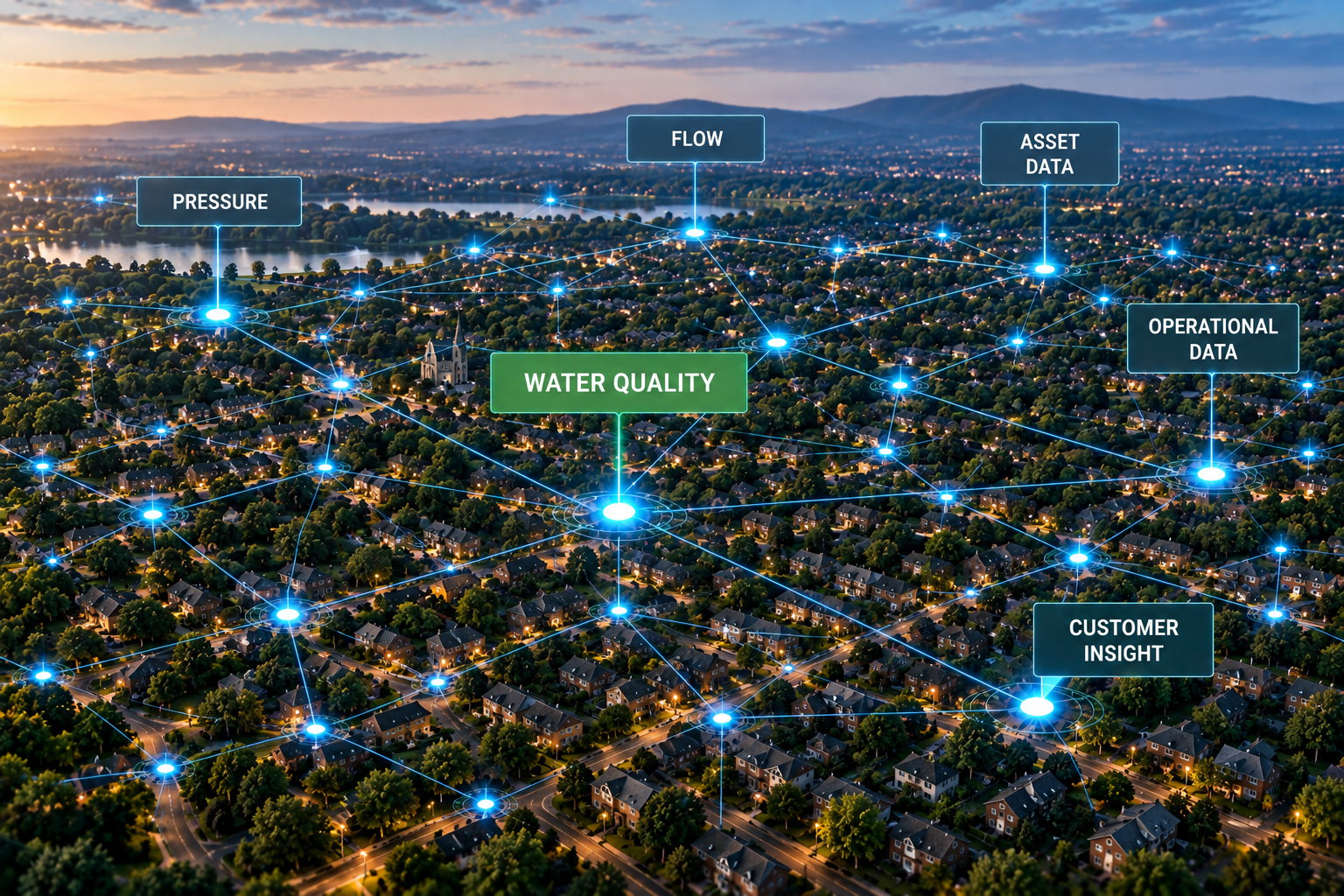
Water companies already combine sampling, asset information, modelling and operational experience to manage drinking water quality. Monitoring at selected distribution locations adds a record of how conditions vary through daily operation, seasonal changes and planned work. It helps connect an investment decision with what happens to the water delivered to customers.
image

Targeting water quality improvements

Before rehabilitation or changes to network operation, a local baseline can help identify recurring turbidity events, unusual disinfectant decay or changes associated with pressure and demand. Combined with existing records, this helps teams investigate causes and focus intervention where it is most likely to help.

Supporting mains work and operational changes

During mains cleaning, rehabilitation, changes to supply routes or pressure management, monitoring can record water quality disturbances and subsequent recovery. This gives water quality teams and delivery partners additional evidence for investigation and assessment alongside site checks, sampling and work records.

Demonstrating the benefits of investment

After an intervention, sustained monitoring helps assess whether the intended improvement has lasted. For example, a reduction in the frequency or duration of turbidity excursions can provide evidence of improvement beyond completion of the work itself.

Comparing results with the baseline, seasonal conditions, operational records and customer contact trends helps assess the contribution of the intervention. Where appropriate, comparison locations strengthen the assessment. This supports reporting on investment benefits and identifies where further action may be needed.

Stronger evidence for AMP9

The same evidence can strengthen AMP9 investment proposals. Observations from AMP8 can help distinguish risks that remain from those already addressed, show which interventions have performed well, and provide a firmer basis for options appraisal and estimates of benefit.

Starting monitoring ahead of relevant planning milestones allows seasonal variation and the persistence of improvements to be considered. This builds the case for future investment while delivering useful operational evidence during AMP8.

Image

How Intelisys helps

Intelisys combines Hydraclam and Chloroclam monitoring with Clamnet to provide remote observations of water quality in distribution networks. We work with water companies and their delivery partners to match monitoring to the question being investigated, whether that is a recurring problem, a planned intervention or the assessment of a completed scheme.
Monitoring complements statutory sampling and the company’s wider water safety arrangements.
image